Building an attosecond X-ray Beamline
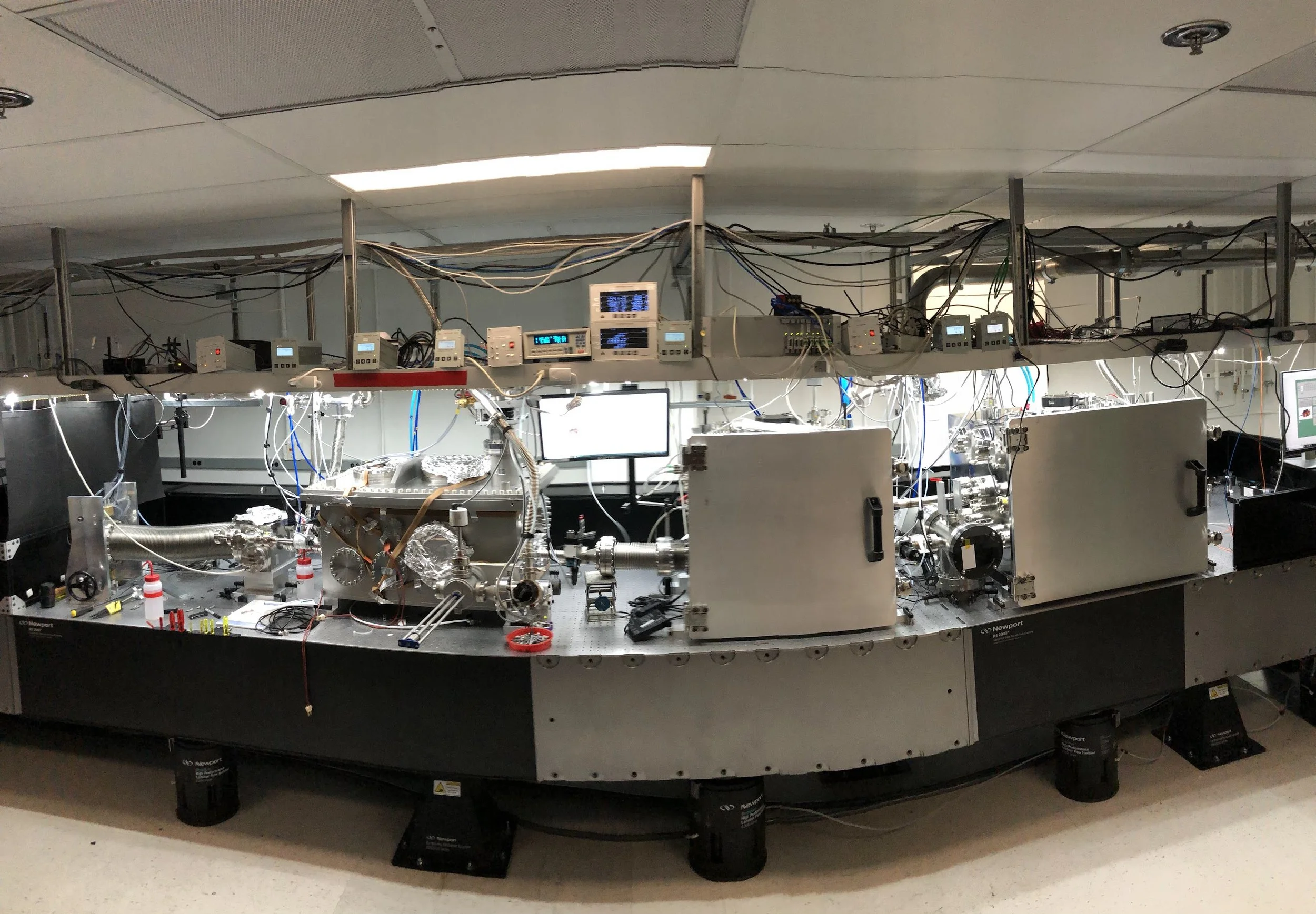
In the Zuerch Lab (2019-2021; UC Berkeley, Department of Chemistry) I led the design of an x-ray beamline capable of sub-femtosecond spectroscopy experiments on quantum materials. A 20 W, 800 nm, 1 kHz Ti:Sapphire seed-laser was separated into two beams: 1) a “pump” beam which could be compressed into a single-cycle, few-fs optical pulse or a few-THz pulse and 2) a probe-beam which was up-converted via high-harmonic generation into an attosecond EUV pulse. These two beams are recombined inside of a series of custom ultra-high vacuum chambers and focused onto a cryogenic sample-holder. The x-ray signal is then transmitted through the sample and disperesed by a grating onto a high-resolution CCD camera, where we measure the x-ray absorption signal. By making the two beam-paths different in lengths (by a few nm!), we could measure the sample’s x-ray response to the optical/THz pump pulse.
I designed the entire beam-line including the optical/THz optics, to the CAD-design of the vacuum chambers, the pulse compression optics, beam diagnostics, the spectrometer, sample holder, and software control.
I designed these ultra-high vacuum chambers in which the x-ray generation occurs, the pump- and probe-beams are time-delayed recombined and focused onto the sample, and the time-resolved absorption signal is measured.
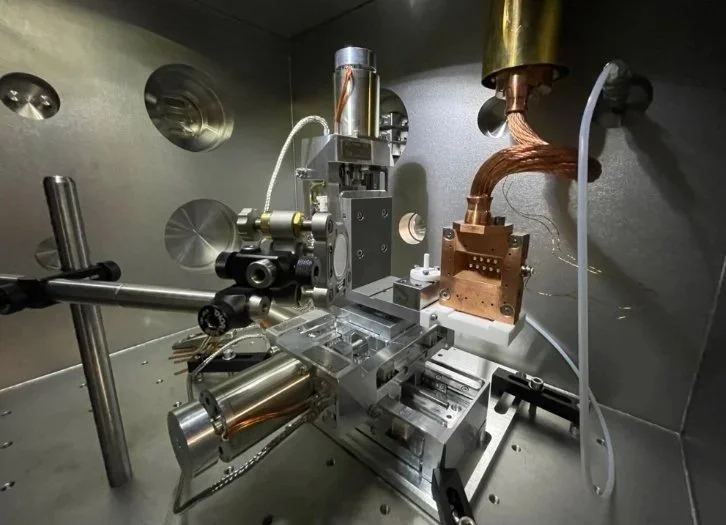
Custom cryogenic sample-stage with XYZ positioning and beam diagnostics.
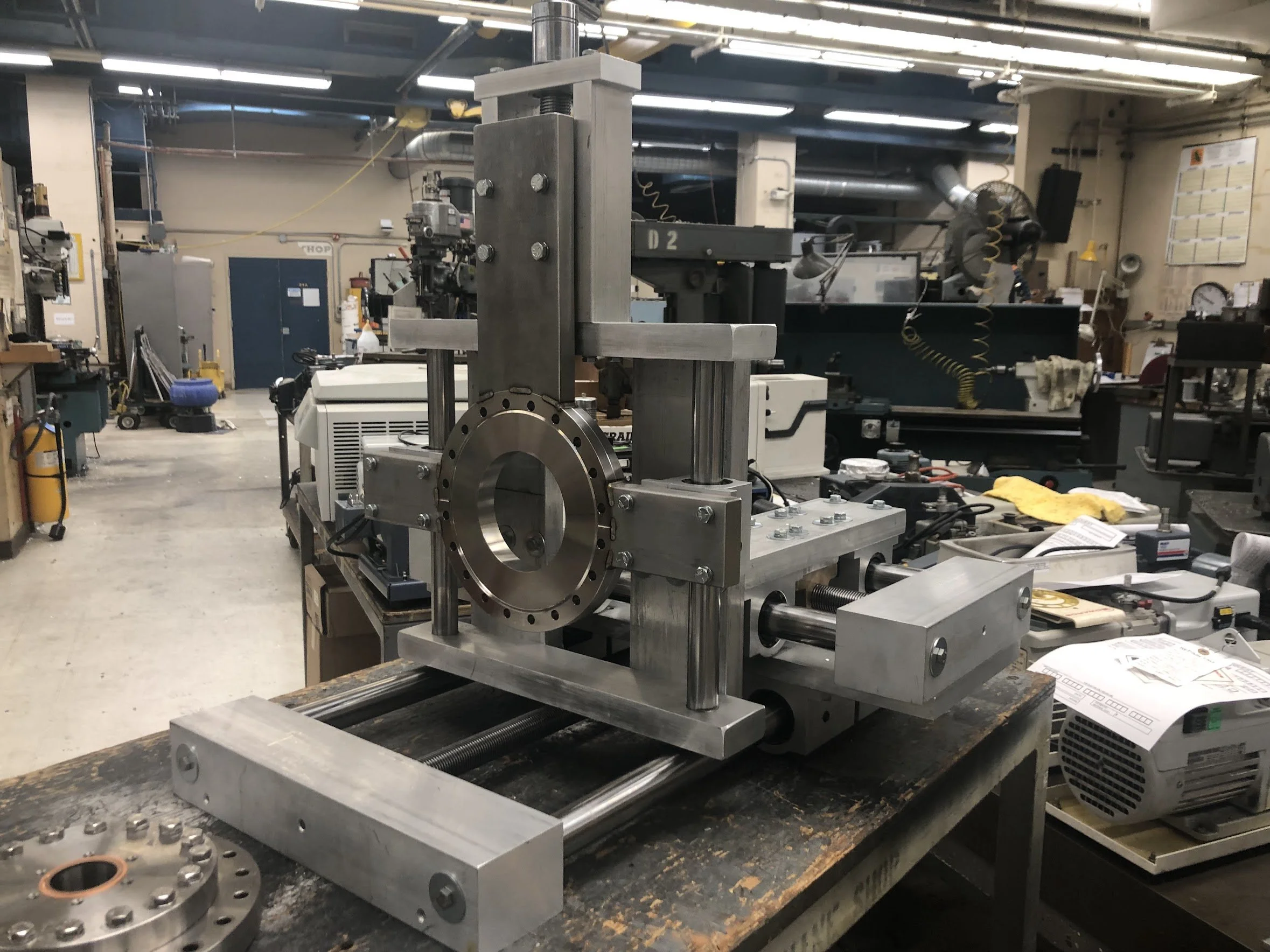
Custom XYZ mount for the CCD spectrometer.
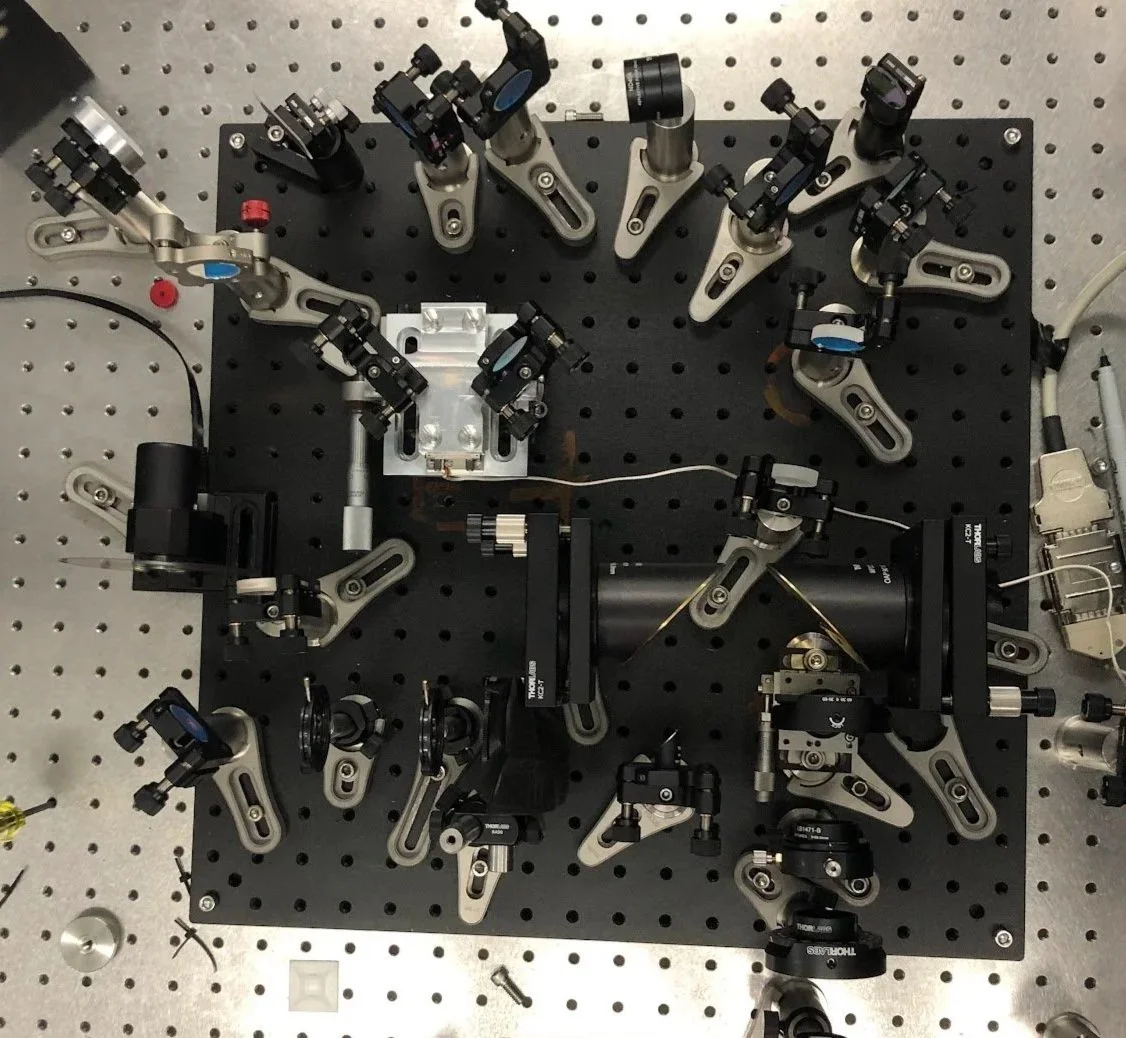
THz beam generation and diagnostics.
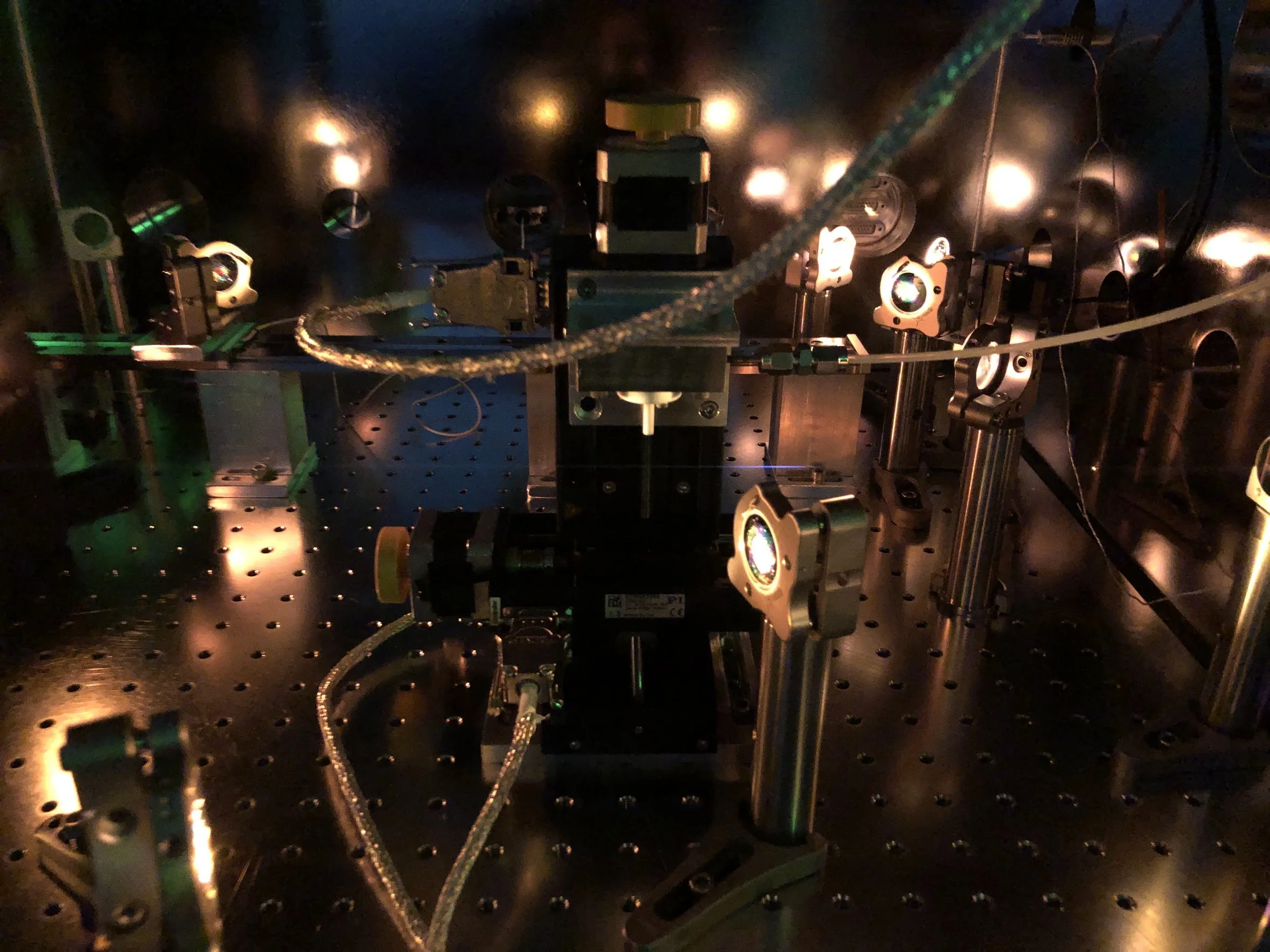
Optics inside of the high-harmonic generation vacuum chamber where the broadband optical seed laser is up-converted into the extreme ultraviolet range. The focused optical beam used to generate the XUV light can be seen as a bright blue streak in the image forefront.
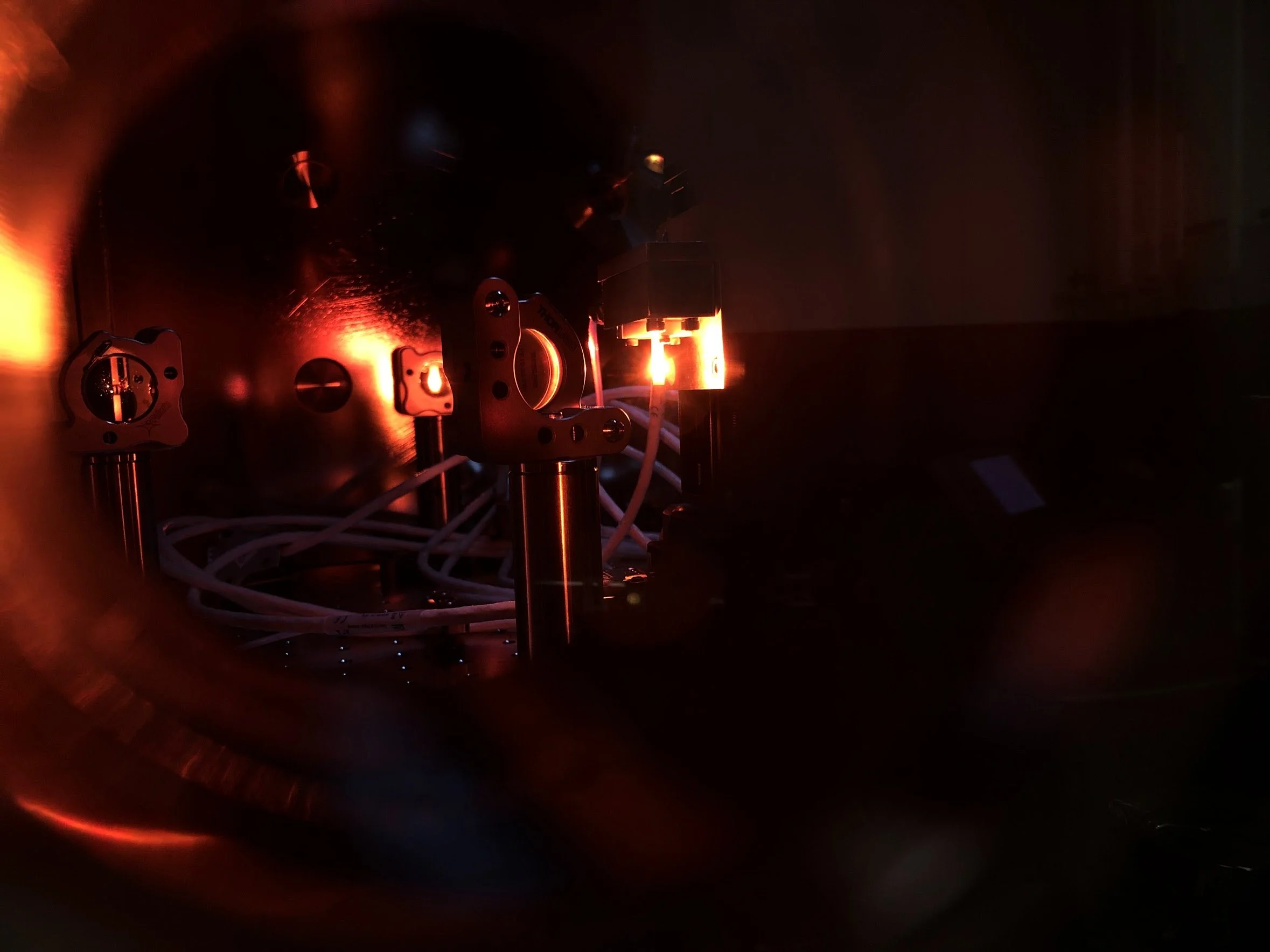
View into the high-harmonic generation chamber. The up-conversion of light from the optical to XUV range occurs inside an Argon gas cell which hangs down from an XYZ stage as seen as the bright spot near the image center.